
Technology
Smart models, engineered for legal work.
Bernima develops specialized models for legal workflows and the architecture they run in. This page separates what is documented in systems Bernima has built from what is still in development.
Our models
Not one model. A stack of them, sized to the task.
A conversational assistant is one large model answering everything. That is the wrong shape for legal work, where most of the volume is structured and only a fraction is open-ended reasoning. Bernima’s models are built the other way round.
- 01
Language models built for legal structure
Trained on the units legal work is made of: clause boundaries, citation form, date precision, custodian and privilege state. Small enough to serve from hardware a firm can own.
- 02
Specialized models that are not language models
Classification, extraction, ranking, deduplication, entity resolution and date arithmetic run on purpose-built models: faster, cheaper, and easier to evaluate against a known answer.
- 03
Frontier models, where the task earns one
Open-ended reasoning can be routed to a frontier model where policy permits, de-identified on the customer’s hardware first, with the routing decision recorded.
- 04
Isolation becomes affordable
Per-matter isolation is easy to promise and expensive to deliver on a hosted model. On models we run ourselves, an isolated instance per matter is an ordinary deployment decision.
- 05
Reproducible, and therefore auditable
Models are version-pinned and retained, so the model that produced an output is still available to explain it. A retired third-party model cannot be re-run against the record it created.
- 06
Cost that does not move
Compute the firm owns rather than tokens it meters, for the work that runs locally. Volume becomes a capacity question rather than a vendor-priced line item.
Routing is per task: the question is which model is right for this piece of work, and the answer is recorded so it can be reviewed. During an evaluation, we compute the same measurements on the customer’s own matters.
Engineering principles
The same standard of evidence, from research to release.
The discipline that governs the research governs the models and the systems around them: state what is known, measure what is claimed, and put guarantees where they cannot be quietly withdrawn.
- 01
A model for each task
Legal work is many tasks, not one conversation. Each is handled by the model built for it, and the choice is recorded.
- 02
Measured before claimed
A capability is a hypothesis until it has been measured on the task it is claimed for, against a known answer.
- 03
Local first
Our models run inside the boundary of the firm that relies on them. Anything that leaves is decided by policy and recorded.
- 04
Guarantees in the architecture
Where a property matters, such as confidentiality, it is enforced by how the system is built rather than promised in a contract.
- 05
The lawyer decides
Our systems extend legal judgement. A qualified person approves what reaches a client and remains responsible for it.
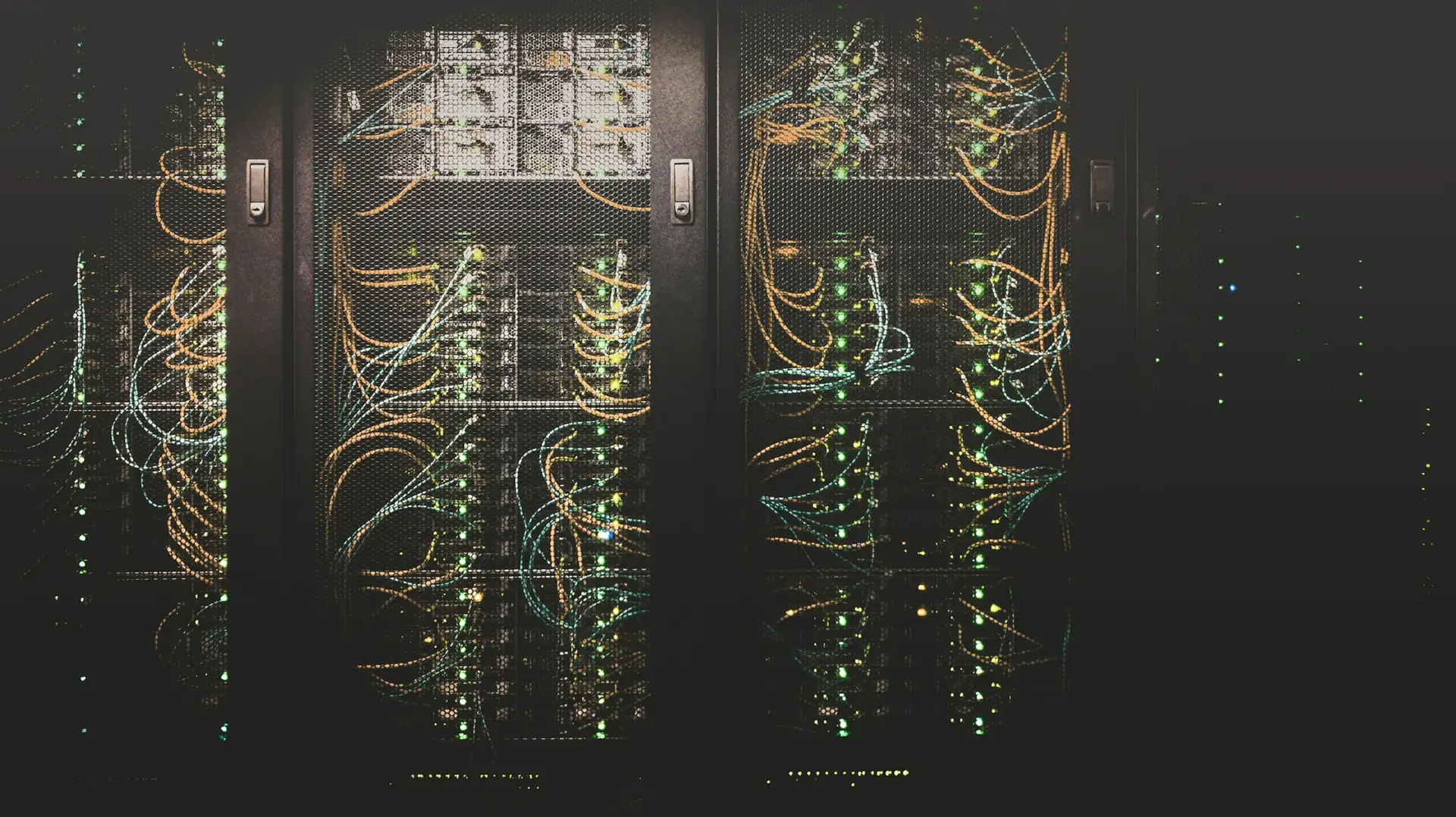
Documented capabilities
What Bernima has built: Bernio OS.
Capabilities described in the published architecture of Bernio OS, Bernima’s secure legal operating system.
- 01
Inside the customer’s perimeter
Installed in the customer’s own data centre or private cloud, or on a dedicated server specified for the site. There is no vendor-held copy of a matter.
- 02
Isolation beneath the application
The matter boundary is enforced before retrieval and before inference, rather than as a permission check inside the application.
- 03
Local models first
Bernima’s legal models run locally. External models are called only where the customer’s policy permits, after de-identification on the customer’s own hardware, and can be switched off entirely.
- 04
Supervised agents
Agents act within a declared scope and runtime limits. A named practitioner approves work before it reaches a client.
- 05
An attributable record
Every action is attributable to the matter, the agent and user, the model and the approval state, in a signed record held in the customer’s environment.
Each property is enforced by how the system is built: beneath the application, on infrastructure the customer controls.
Bernio OS in the portfolio
In development
Applied research directions.
The model and engineering work Bernima is advancing now, alongside the products it ships.
- 01In development
Legal language models
Language models trained for legal text at more than one size, compact enough to run on infrastructure a firm owns.
- 02In development
Specialized task models
Purpose-built models for the structured work in legal workflows: classification, extraction, entity resolution and date arithmetic.
- 03In development
Evaluation for legal work
Evaluation that measures whether a system refuses correctly, cites sources that exist, and carries uncertainty forward instead of resolving it silently.
- 04In development
Private inference and isolation
Running capable models inside a controlled perimeter, with per-matter isolation that can be demonstrated to a reviewer rather than asserted.

How research reaches practice
From a research question to a product people rely on.
- 01
Machine learning research
Open questions about legal work as a learning problem: which tasks it is made of, and how a model's performance on each can be measured.
In Bernima’s workFive research areas, from legal language models to provenance - 02
Specialized models
Smart models fitted to the tasks of legal workflows, each evaluated against a known answer rather than on fluency.
In Bernima’s workLegal language models and specialized task models - 03
Secure engineering
The architecture that lets those models run where the matter lives and behave predictably under professional obligations.
In Bernima’s workLocal-first inference, isolation before retrieval, a signed record - 04
B2B and B2C products
Products for legal teams and for consumers, built for work where reliability is part of the specification.
In Bernima’s workBernio OS and Bernio Chat, for privileged legal work